Filament Color Tech Gets Wild: Quantum Dots, Gradient PLA, and What Comes Next
From quantum dot glow effects to curated gradient PLA launches, color science is becoming a real filament battleground.
Josh Holtzclaw
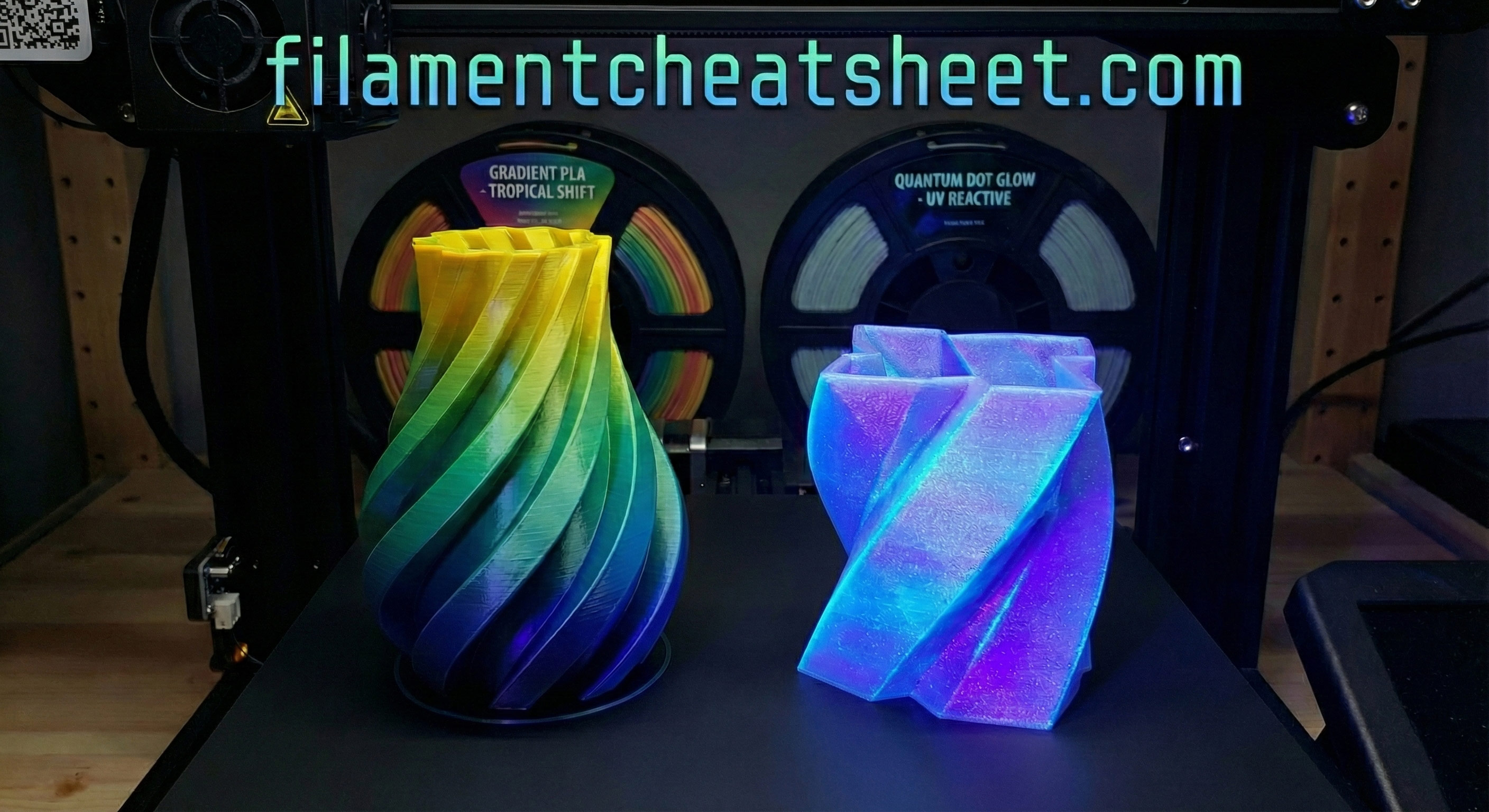
For years, filament innovation was mostly about strength, heat resistance, printability improvements, and cost. Now there is a noticeable push into visual and optical effects that go beyond sparkly or silk.
Sources: ProtoPasta's quantum dot announcement, 3D Printing Industry coverage, All3DP overview, and Polymaker's Panchroma launch.
Quantum Dot Filament: A New Kind of Glow#
ProtoPasta showcased an experimental quantum dot-infused filament around CES 2026, describing it as using quantum dot technology to create intense UV-reactive effects. Coverage describes the concept as incorporating semiconductor nanocrystals (quantum dots) into a thermoplastic filament for controlled emission under UV light.
Why this matters: it signals that filament makers are experimenting with additives closer to materials science than hobby glitter.
Gradient PLA Is Getting Industrialized#
Gradients used to be mostly multi-color silk with inconsistent transitions and limited colorways. Polymaker's Panchroma line is pushing gradients as a more formal product category, including a launch of 24 gradient PLA options with different transition styles (including translucent blends and matte shifts).
What These Innovations Mean for Real Printing#
Optical and novelty filaments usually create two practical concerns:
Nozzle Wear and Clog Risk#
Some additive-heavy filaments can behave differently in the melt zone. If a filament includes particles or specialty additives, watch for nozzle compatibility guidance.
Surface Finish and Layer Visibility#
Color-effect filaments often make layer lines more visible, not less. Consider thinner layers or slower outer walls for showcase prints.
How to Choose When to Use Effect Filaments#
Use them when the filament is the point:
- Signage, logos, display models
- Gifts, props, cosplay detail pieces
- Accent panels on otherwise plain prints
Do not use them when you just need a tough bracket — unless you have tested the filament's mechanical behavior for that job.
A Smart Way to Test New Effect Filaments#
If you are building a cheat sheet, a consistent test protocol makes your writeups more useful:
- 30-minute calibration print
- Retraction test
- Top surface finish sample
- Thin wall sample
- A small functional part with a stress point (like a snap tab)
Then document:
- Best temperature window
- Fan range
- Retraction changes vs your baseline PLA or PETG
- Visual notes — how lighting changes the effect
What to Watch Next#
Expect more experimentation in UV-reactive additives and curated color systems, plus more integration with spool metadata and tagging standards.
Related Articles
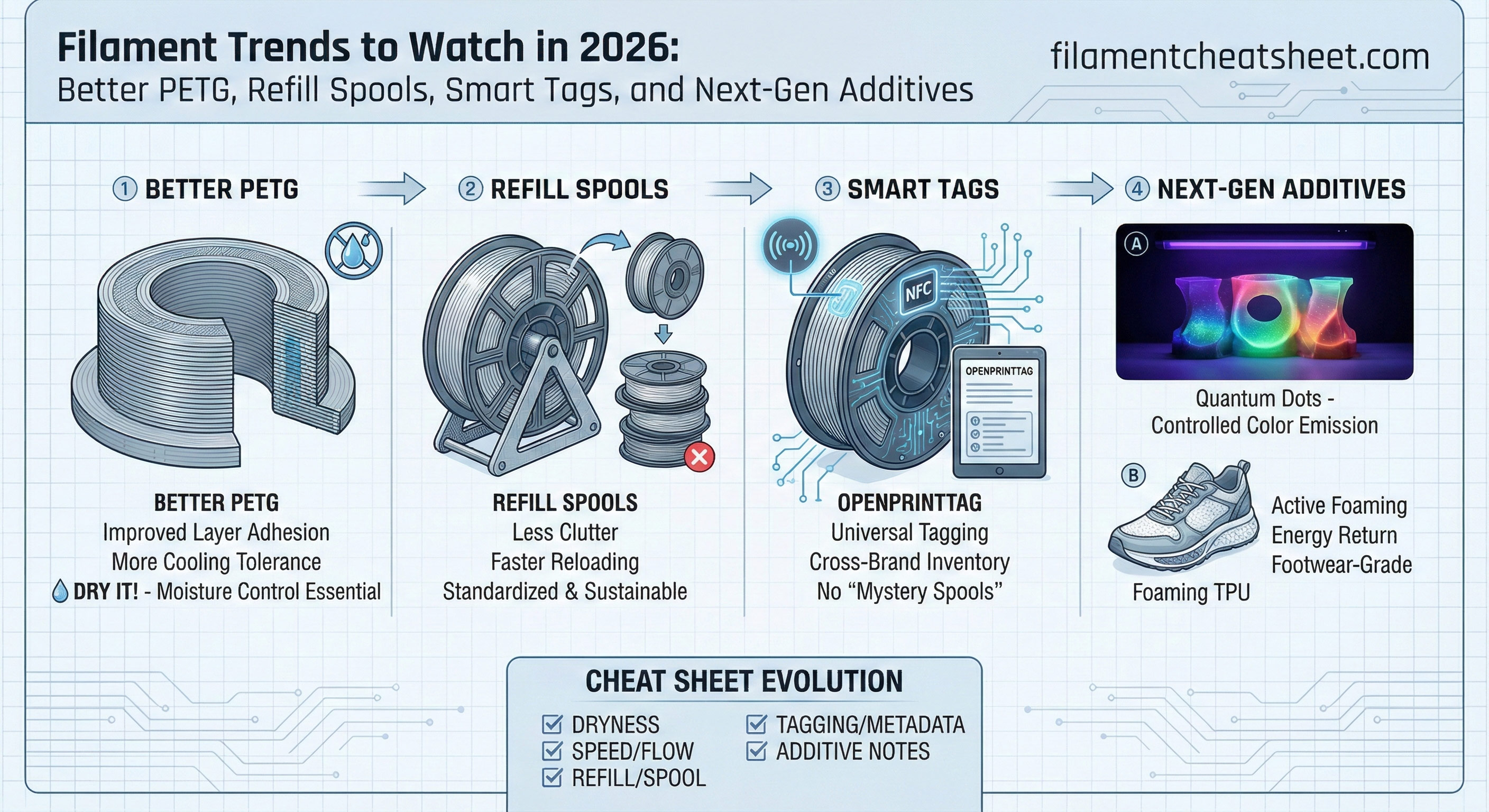
Filament Trends to Watch in 2026: Better PETG, Refill Spools, Smart Tags, and Next-Gen Additives
What is actually changing in filament right now, and what it means for print speed, reliability, waste reduction, and material selection.

OpenPrintTag: The Open-Source Smart Spool Standard That Could De-Fragment Filament Metadata
OpenPrintTag is an open NFC standard for filament data designed to work across brands and stay offline. Here is why it matters and how it could change spool management.
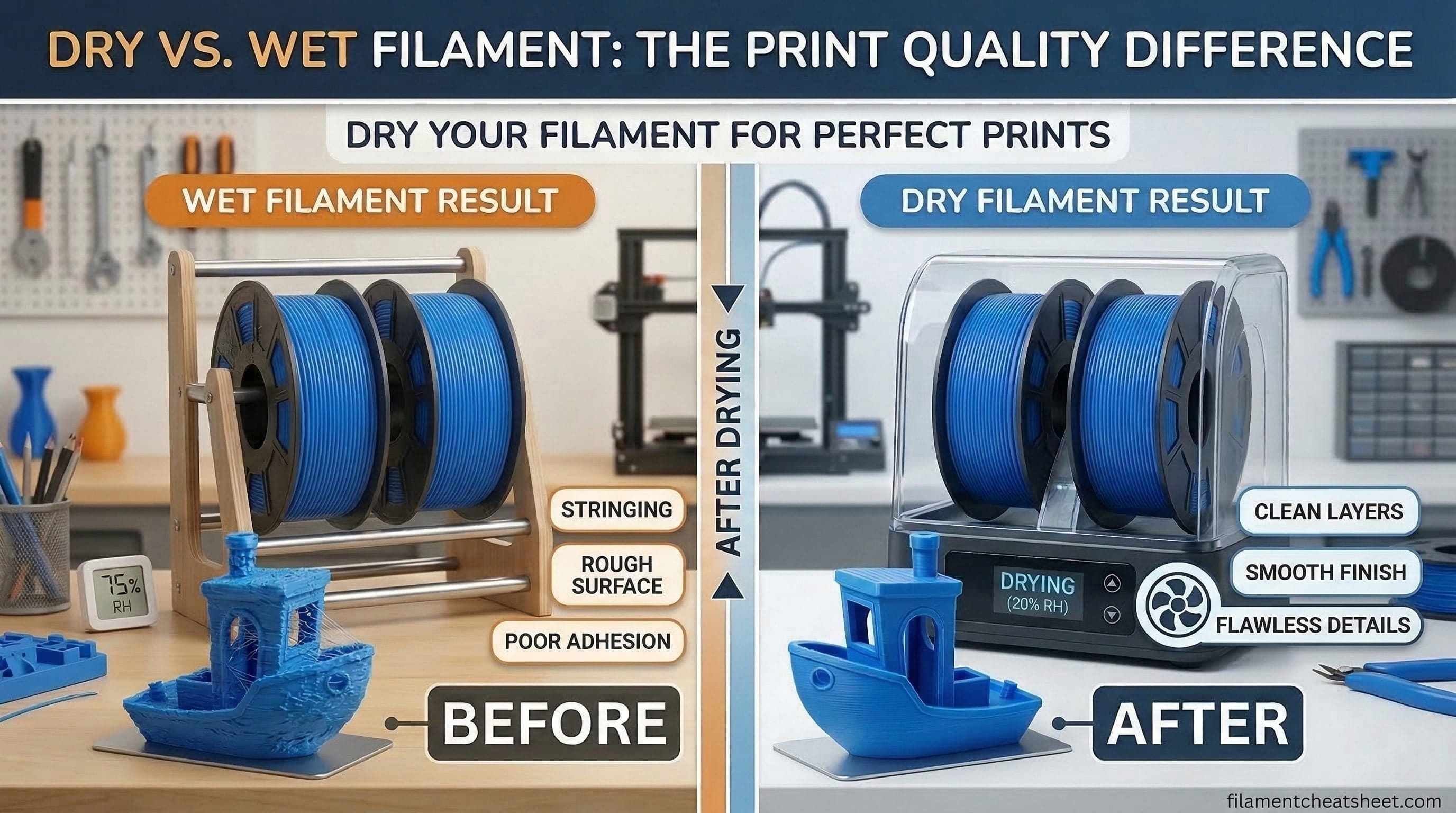
How to Dry and Store 3D Printing Filament (So It Stops Ruining Your Prints)
A practical guide to filament moisture — how to spot it, how to fix it, and how to keep every spool dry long-term with the right storage and drying setup.