PLA vs PETG: Which Filament Should You Use?
A detailed comparison of PLA and PETG filaments — covering strength, ease of printing, heat resistance, and when to use each one.
Josh Holtzclaw

PLA and PETG are the two most popular filaments in 3D printing, and choosing between them is one of the first decisions every maker faces. Both are beginner-friendly, widely available, and capable of producing excellent prints — but they have very different strengths.
Quick Comparison#
| Property | PLA | PETG | | --- | --- | --- | | Nozzle Temp | 200-215°C | 230-250°C | | Bed Temp | 55-65°C | 70-85°C | | Enclosure | Not needed | Not needed | | Heat Resistance | Low (~60°C) | Moderate (~80°C) | | Flexibility | Brittle | Slightly flexible | | Moisture Sensitivity | Low | Moderate | | Ease of Printing | Easiest | Easy |
When to Use PLA#
PLA is your best bet when:
- You're printing decorative items, models, or prototypes
- Surface finish matters more than strength
- You're a beginner and want the easiest experience
- The part won't be exposed to heat above 50°C
- You need the widest range of color options
PLA Strengths#
- Extremely easy to print with minimal tuning
- Produces sharper details and smoother surfaces
- Low warping means fewer failed prints
- More environmentally friendly (plant-based)
When to Use PETG#
PETG is the better choice when:
- You need parts with better durability and impact resistance
- The part will be exposed to moderate heat
- You're printing functional parts (brackets, enclosures, tools)
- The part needs some flexibility without snapping
- Chemical resistance matters
PETG Strengths#
- Significantly better impact resistance than PLA
- Higher heat deflection temperature
- Good chemical resistance
- Better layer adhesion for stronger parts
The Downsides#
Neither filament is perfect. Here's what to watch out for:
PLA Downsides#
- Brittle — PLA parts can snap under sudden impact
- Poor heat resistance — will deform in a hot car or near a heat source
- Not great for outdoor use long-term
PETG Downsides#
- Prone to stringing — requires more retraction tuning
- Can stick to PEI sheets too well (use a release agent)
- Slightly more hygroscopic than PLA
- Surface finish isn't as smooth as PLA
Print Settings Comparison#
Temperature#
PETG runs hotter across the board. Expect to increase both nozzle and bed temperature by about 30-40°C compared to your PLA profile.
Cooling#
This is one of the biggest differences. PLA loves maximum cooling, while PETG prefers moderate cooling (40-60% fan speed). Too much cooling on PETG leads to poor layer adhesion.
Speed#
Both materials print well at similar speeds (40-60 mm/s), but PETG benefits from a slightly slower first layer to ensure proper adhesion.
The Verdict#
For most people, start with PLA and add PETG to your toolkit when you need functional parts or better durability. Many experienced makers keep both on hand — PLA for prototypes and visual models, PETG for anything that needs to survive real-world use.
Check out our detailed PLA vs PETG comparison for a full side-by-side breakdown with temperature charts and material properties.
Related Articles
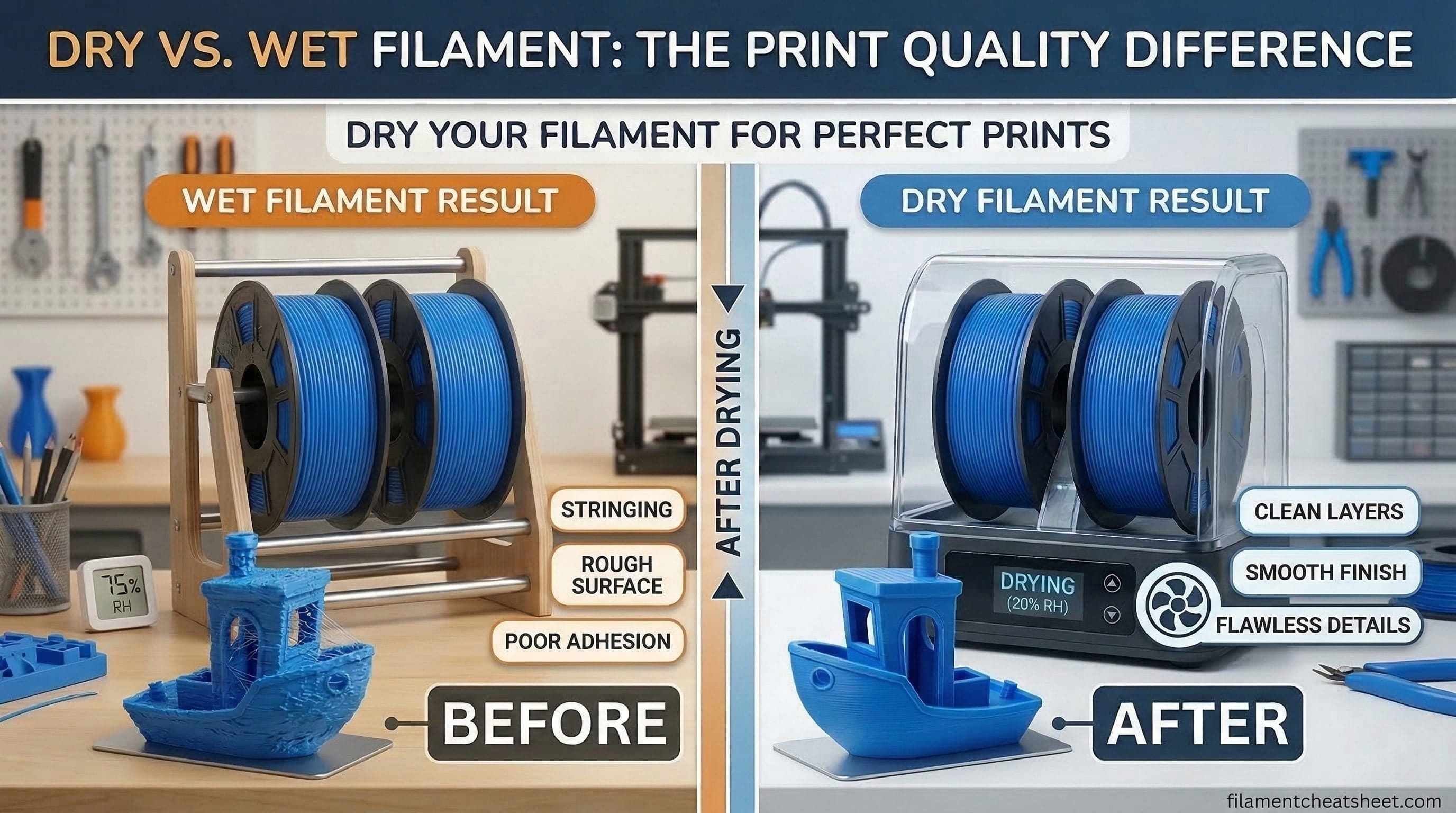
How to Dry and Store 3D Printing Filament (So It Stops Ruining Your Prints)
A practical guide to filament moisture — how to spot it, how to fix it, and how to keep every spool dry long-term with the right storage and drying setup.
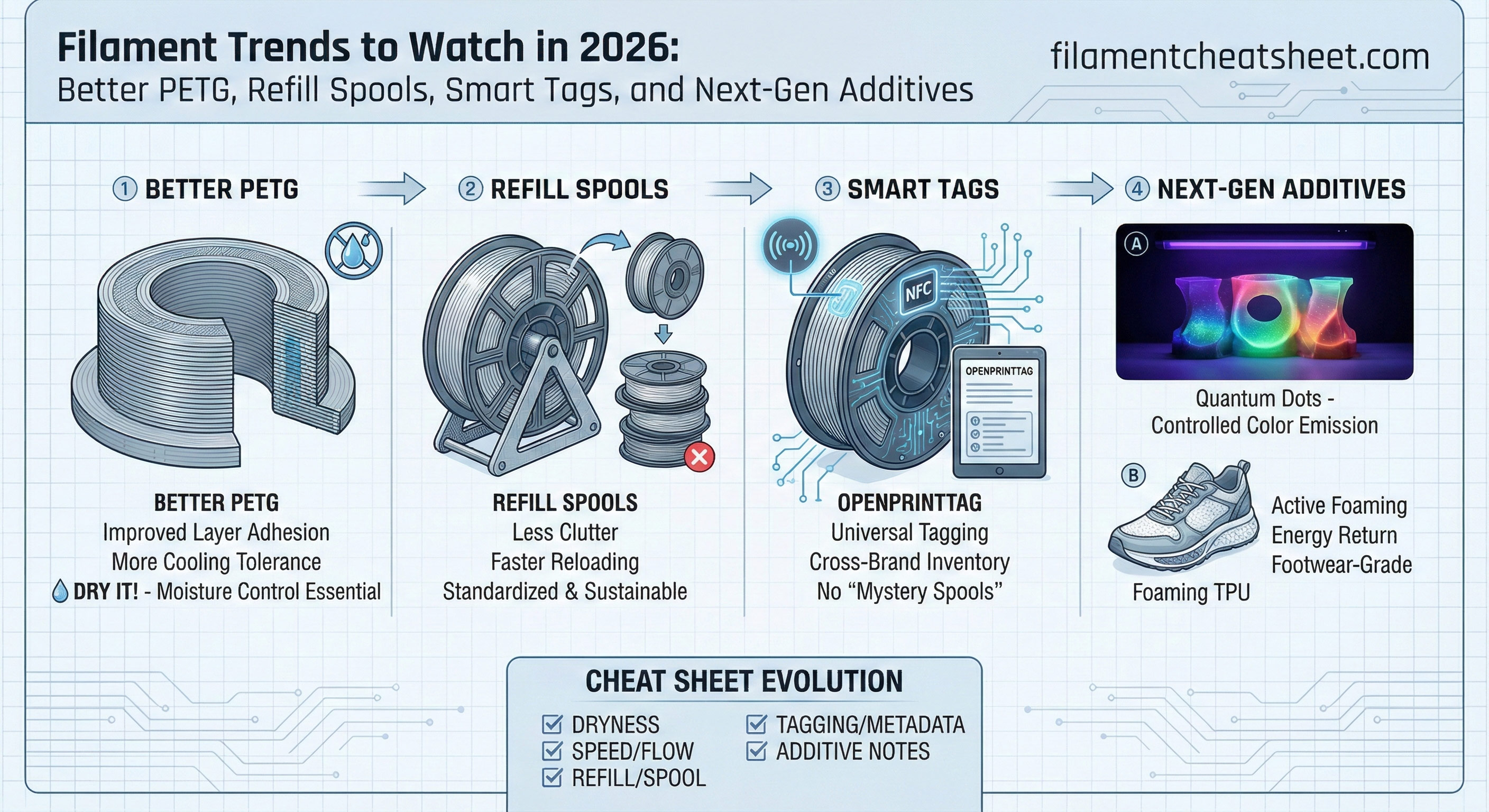
Filament Trends to Watch in 2026: Better PETG, Refill Spools, Smart Tags, and Next-Gen Additives
What is actually changing in filament right now, and what it means for print speed, reliability, waste reduction, and material selection.
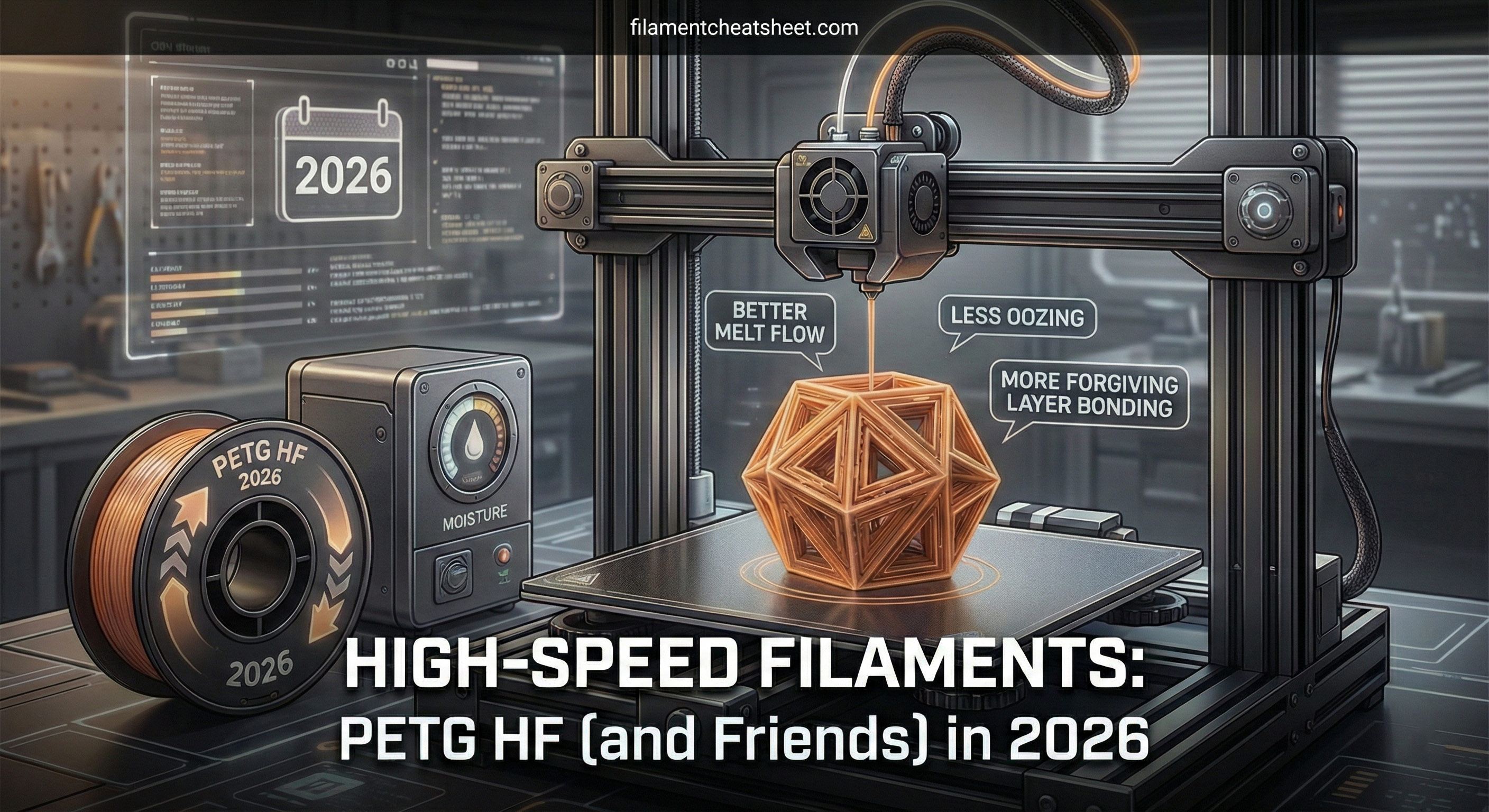
High-Speed Filaments Are Getting Serious: PETG HF (and Friends) in 2026
High-speed filaments are no longer just PLA at 200 mm/s. PETG HF and other high-flow blends are changing what fast, reliable printing looks like.