Filament Color Tech Gets Wild: Quantum Dots, Gradient PLA, and What Comes Next
From quantum dot glow effects to curated gradient PLA launches, color science is becoming a real filament battleground.
Josh Holtzclaw
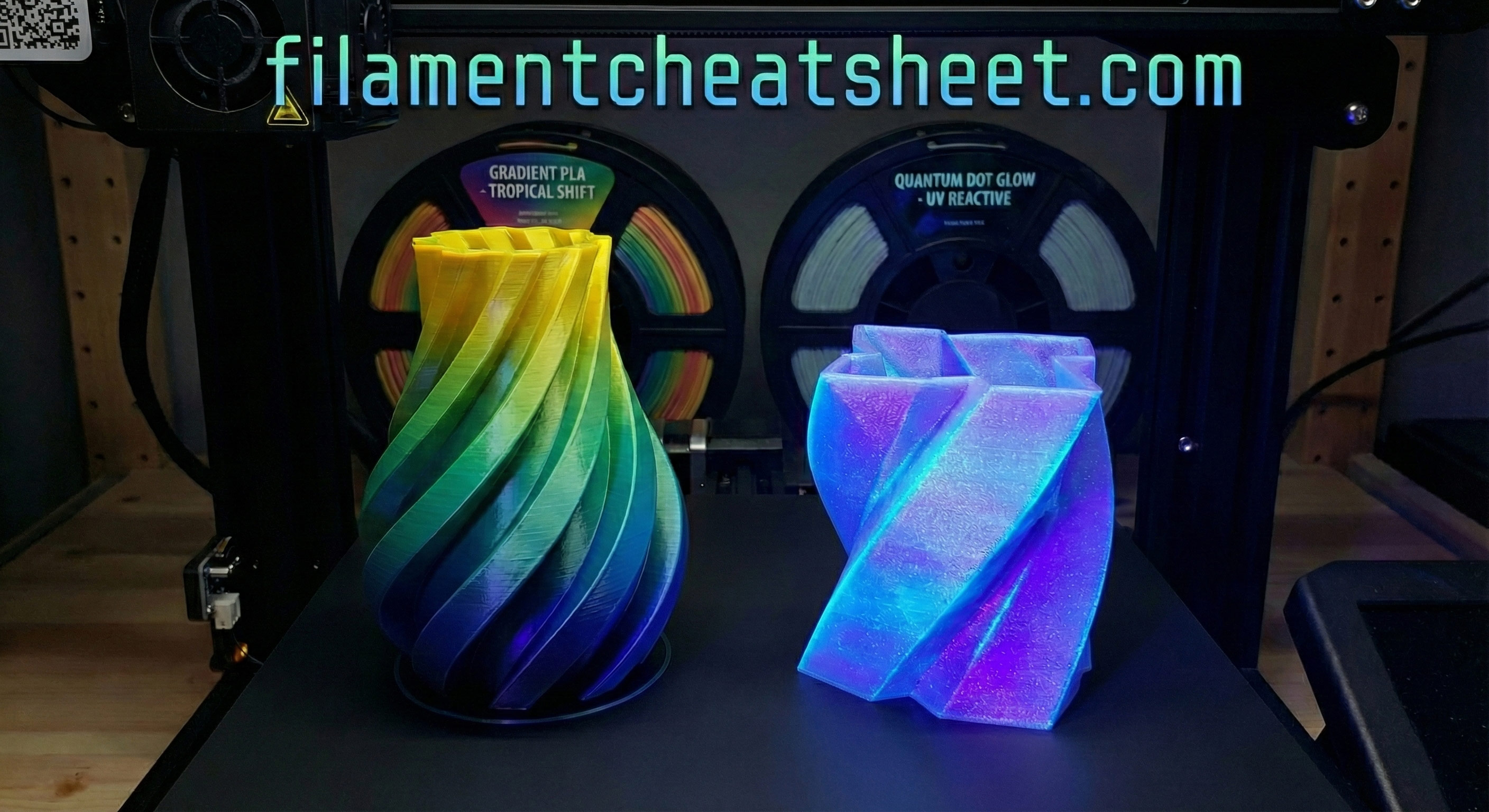
For years, filament innovation was mostly about strength, heat resistance, printability improvements, and cost. Now there is a noticeable push into visual and optical effects that go beyond sparkly or silk.
Sources: ProtoPasta's quantum dot announcement, 3D Printing Industry coverage, All3DP overview, and Polymaker's Panchroma launch.
Quantum Dot Filament: A New Kind of Glow#
ProtoPasta showcased an experimental quantum dot-infused filament around CES 2026, describing it as using quantum dot technology to create intense UV-reactive effects. Coverage describes the concept as incorporating semiconductor nanocrystals (quantum dots) into a thermoplastic filament for controlled emission under UV light.
Why this matters: it signals that filament makers are experimenting with additives closer to materials science than hobby glitter.
Gradient PLA Is Getting Industrialized#
Gradients used to be mostly multi-color silk with inconsistent transitions and limited colorways. Polymaker's Panchroma line is pushing gradients as a more formal product category, including a launch of 24 gradient PLA options with different transition styles (including translucent blends and matte shifts).
What These Innovations Mean for Real Printing#
Optical and novelty filaments usually create two practical concerns:
Nozzle Wear and Clog Risk#
Some additive-heavy filaments can behave differently in the melt zone. If a filament includes particles or specialty additives, watch for nozzle compatibility guidance.
Surface Finish and Layer Visibility#
Color-effect filaments often make layer lines more visible, not less. Consider thinner layers or slower outer walls for showcase prints.
How to Choose When to Use Effect Filaments#
Use them when the filament is the point:
- Signage, logos, display models
- Gifts, props, cosplay detail pieces
- Accent panels on otherwise plain prints
Do not use them when you just need a tough bracket, unless you have tested the filament's mechanical behavior for that job.
A Smart Way to Test New Effect Filaments#
If you are building a cheat sheet, a consistent test protocol makes your writeups more useful:
- 30-minute calibration print
- Retraction test
- Top surface finish sample
- Thin wall sample
- A small functional part with a stress point (like a snap tab)
Then document:
- Best temperature window
- Fan range
- Retraction changes vs your baseline PLA or PETG
- Visual notes: how lighting changes the effect
What to Watch Next#
Expect more experimentation in UV-reactive additives and curated color systems, plus more integration with spool metadata and tagging standards.
Related Articles
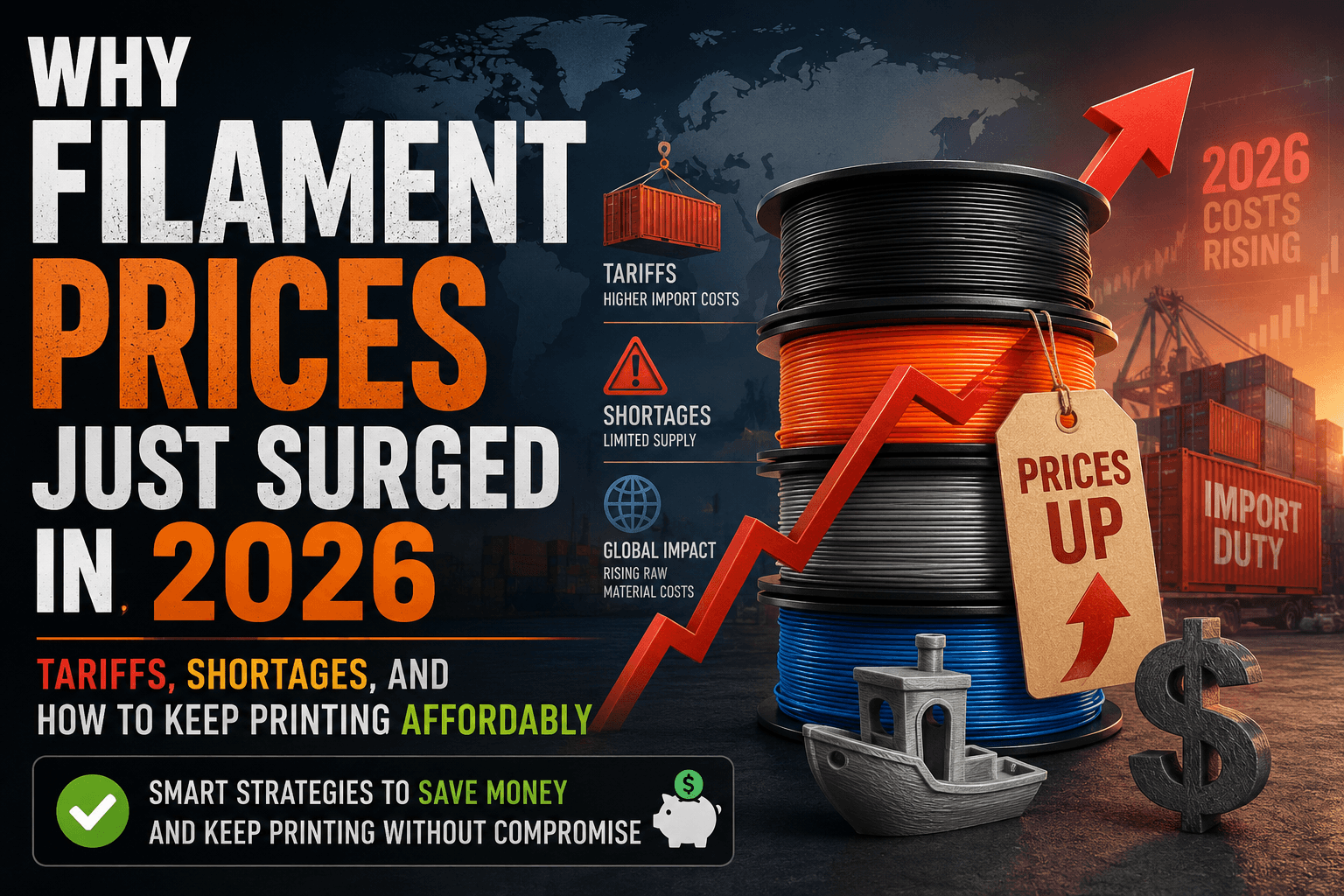
Why Filament Prices Just Surged in 2026: Tariffs, Shortages, and How to Keep Printing Affordably
Filament prices jumped as much as 59% in 2026. Here is what is driving it (tariffs, supply crunches, TPU shortages) and the practical moves that keep your cost-per-print low.
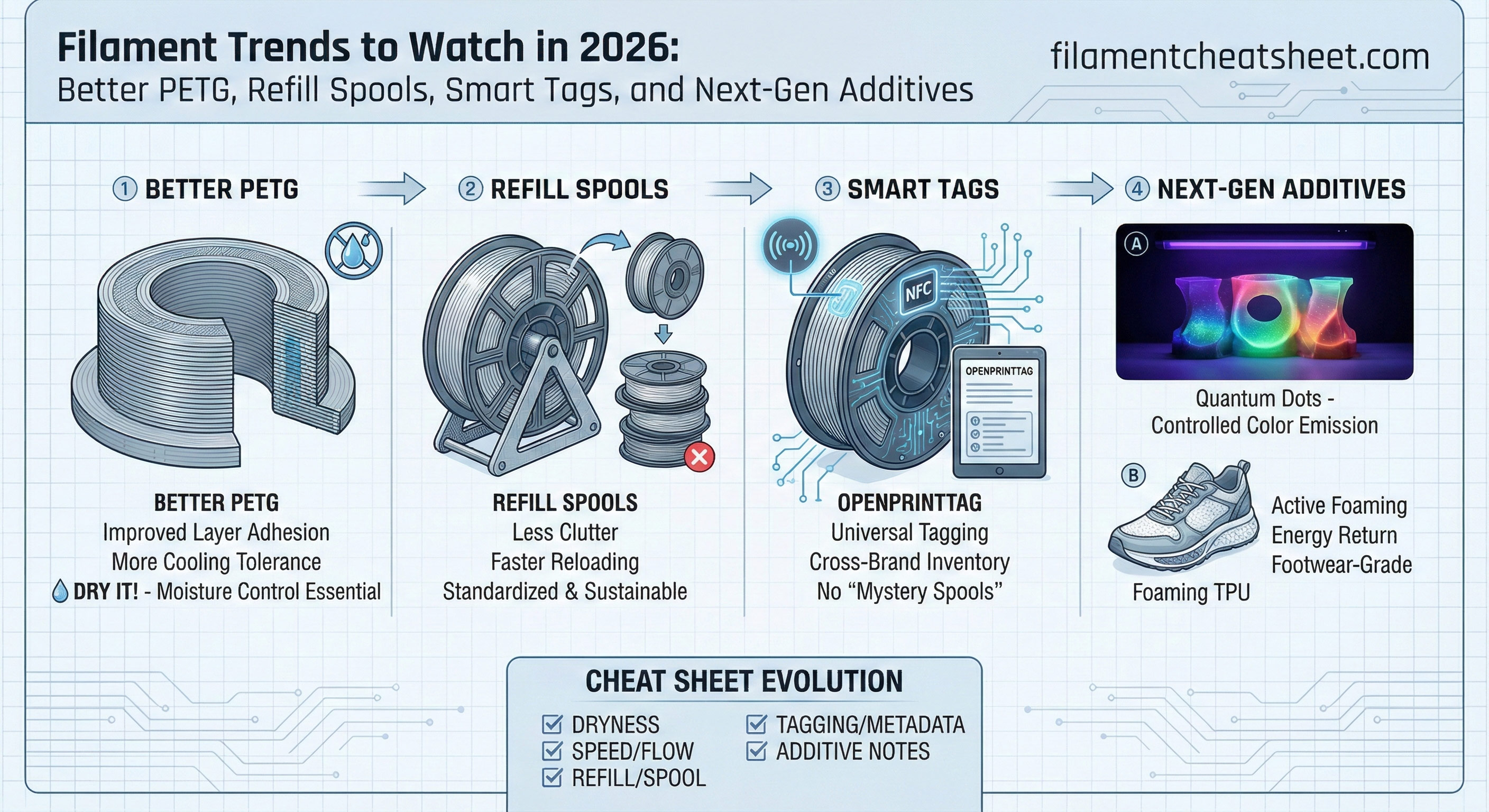
Filament Trends to Watch in 2026: Better PETG, Refill Spools, Smart Tags, and Next-Gen Additives
What is actually changing in filament right now, and what it means for print speed, reliability, waste reduction, and material selection.

Best PLA Filament Brands Ranked (2026): Premium, Value, and Specialty PLA
A tier-based ranking of the best PLA filament brands for 2026, from premium QC picks to budget value and specialty PLA, plus the best PLA brand for every use case.