PPA and PPA-CF Filament: The High-Temperature Nylon Explained
PPA is a semi-aromatic nylon that outperforms PA6 on heat, chemicals and dimensional stability. A practical guide to PPA and PPA-CF, how they compare to PA6, PA12 and PA612, and what your printer needs.
Josh Holtzclaw
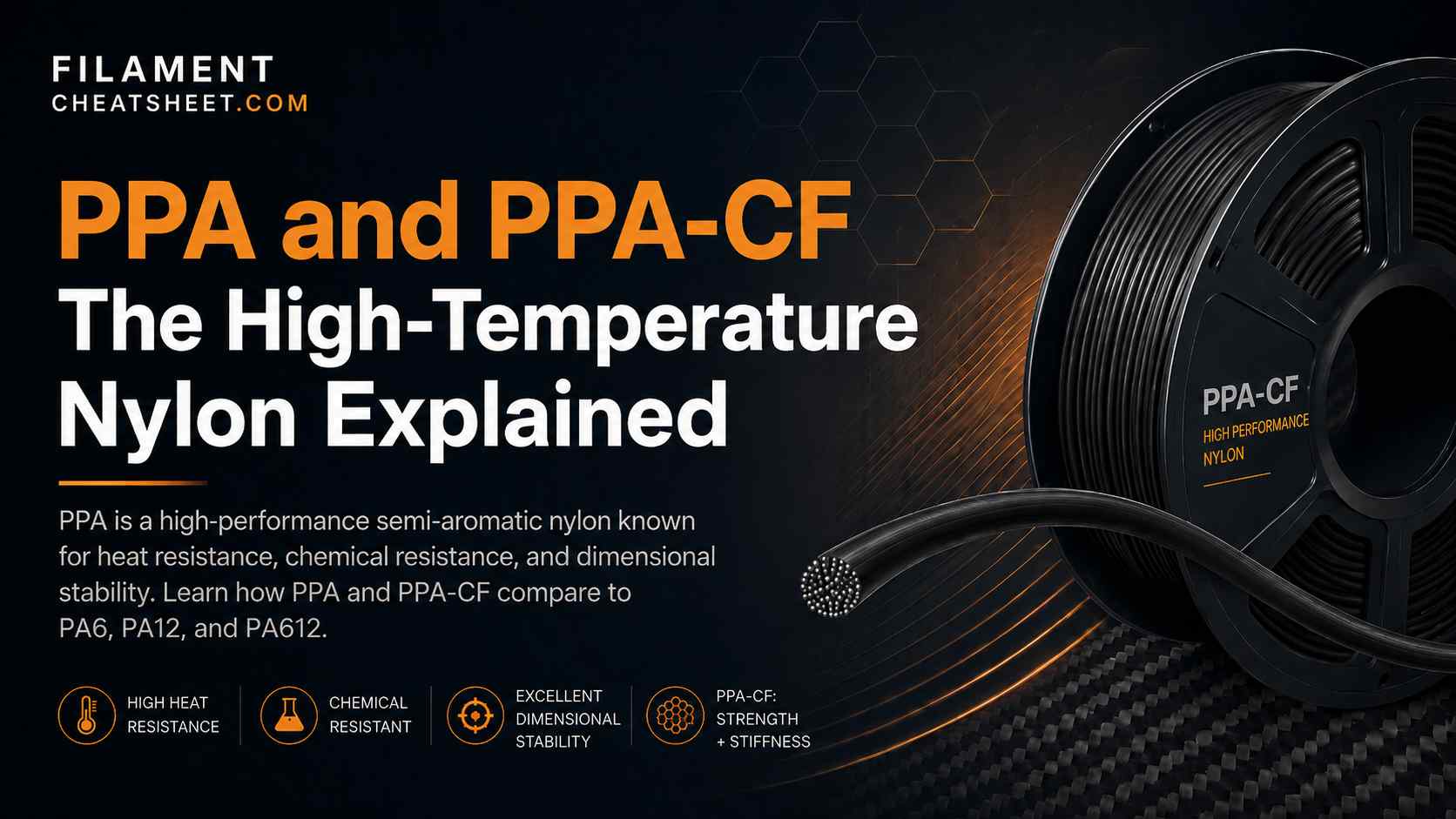
PPA, or polyphthalamide, is a high-performance engineering polyamide known for its strength, heat resistance, chemical resistance, dimensional stability, and relatively low moisture absorption compared with many traditional nylon materials.
It is commonly used in demanding industries such as automotive, aerospace, electronics, and industrial manufacturing. In 3D printing, PPA is best suited for functional parts that need to withstand high temperatures, mechanical stress, chemicals, or harsh environments while maintaining their shape and mechanical properties.
If you are choosing between engineering nylons, see our PPA and carbon fiber PPA guides for settings, or compare PPA-CF against carbon fiber nylon.
Is PPA Actually a Nylon?#
Yes. PPA sits inside the polyamide family, the same family as PA6, PA12 and PA612. The difference is structural: PPA is a semi-aromatic polyamide, meaning aromatic rings from terephthalic or isophthalic acid sit directly in the polymer backbone. PA6, PA12 and PA612 are fully aliphatic, built from straight carbon chains.
That single change is responsible for nearly every advantage PPA has. Aromatic rings stiffen the chain, which raises the glass transition temperature to roughly 130°C and the melting point to around 300°C, and they dilute the amide groups that attract water, which is why PPA absorbs far less moisture than PA6.
You will also see PPA sold under names like PA6T, PA9T and PA10T, or trade names such as Amodel, Zytel HTN and Grivory. Those are all PPA grades.
PPA-CF#
PPA-CF is PPA reinforced with carbon fiber.
The carbon fiber reinforcement significantly increases stiffness, strength, dimensional stability, and resistance to deformation under load. It can also reduce shrinkage and warping compared with unfilled engineering polymers.
PPA-CF is designed for demanding engineering applications such as mechanical prototypes, automotive components, structural parts, tooling, fixtures, and load-bearing components.
In practice, most PPA sold for 3D printing is reinforced. If you are shopping for PPA filament, expect to be choosing between carbon-fiber and glass-fiber grades rather than unfilled resin.
Key Properties#
Strength and Stiffness#
PPA-CF offers very high strength and rigidity compared with most standard 3D printing materials.
Some high-performance formulations can achieve flexural strengths above 200 MPa, although exact mechanical properties vary considerably between manufacturers and formulations.
The high stiffness of carbon fiber-reinforced PPA makes it particularly useful for structural components, fixtures, brackets, and parts that need to resist bending under load.
Heat Resistance#
PPA has significantly better high-temperature performance than common materials such as PLA, PETG, ABS, and many conventional nylon formulations.
High-performance PPA-CF formulations can maintain useful mechanical properties at temperatures where standard thermoplastics would begin to soften or deform.
Actual heat resistance varies by formulation, so heat deflection temperature and continuous-use temperature should always be checked on the manufacturer's technical data sheet.
Chemical Resistance#
PPA offers strong resistance to many oils, greases, fuels, solvents, and industrial chemicals.
This makes it useful for automotive, machinery, electronics, and industrial applications where printed parts may be exposed to chemicals that would degrade less resistant materials.
Moisture Resistance#
Like other polyamides, PPA can absorb moisture, but many PPA formulations absorb significantly less moisture than PA6.
Lower moisture absorption helps PPA maintain more consistent dimensions and mechanical properties in humid environments.
PPA filament still needs to be dried before printing and stored carefully after drying.
Dimensional Stability#
PPA offers excellent dimensional stability, particularly when reinforced with carbon fiber.
The carbon fiber reinforcement helps reduce shrinkage and deformation while increasing stiffness, making PPA-CF useful for precision parts and larger engineering components.
PPA vs PA6 vs PA12 vs PA612#
PPA belongs to the broader polyamide family, which also includes materials such as PA6, PA12, and PA612. However, each material has a different balance of strength, flexibility, moisture resistance, heat resistance, and printability.
PPA#
PPA is generally the highest-performance option of these materials when heat resistance, stiffness, chemical resistance, and dimensional stability are the main priorities.
It is well suited for:
- Automotive components
- Industrial machinery
- High-temperature parts
- Structural components
- Electronics
- Tooling and fixtures
PPA and PPA-CF are generally more demanding to print than standard nylon filaments and often require higher extrusion temperatures.
PA6#
PA6, or Nylon 6, is one of the most common engineering nylons used in 3D printing.
It provides excellent toughness, strength, impact resistance, abrasion resistance, and fatigue resistance.
Its main disadvantage is moisture absorption. PA6 absorbs considerably more moisture than materials such as PA12, which means improper drying can quickly affect print quality and mechanical performance.
PA6 is commonly used for:
- Gears
- Bushings
- Mechanical components
- Brackets
- Functional prototypes
- Industrial parts
PA6 is generally stiffer and more heat resistant than PA12 but can be more difficult to print because of moisture sensitivity and warping.
PA12#
PA12, or Nylon 12, has much lower moisture absorption than PA6.
This gives it better dimensional stability in humid environments and makes its mechanical properties less sensitive to changes in moisture.
PA12 is also generally more flexible than PA6 and offers excellent impact, chemical, and abrasion resistance.
It is commonly used for:
- Flexible mechanical parts
- Tubing
- Clips
- Connectors
- Protective components
- Wire and cable applications
- Functional prototypes
PA12 is often considered one of the easier engineering nylons to work with because of its lower moisture absorption and improved dimensional stability.
PA612#
PA612, or Nylon 612, falls between PA6 and PA12 in many areas.
It provides lower moisture absorption than PA6 while retaining good stiffness, strength, wear resistance, and dimensional stability.
This makes PA612 useful when you want something less moisture-sensitive than PA6 without giving up too much rigidity.
Common applications include:
- Mechanical components
- Connectors
- Industrial parts
- Bushings
- Housings
- Durable functional components
Quick Comparison#
| Material | Strength | Stiffness | Moisture Resistance | Heat Resistance | Print Difficulty |
|---|---|---|---|---|---|
| PPA | Very High | Very High | Very Good | Excellent | Very High |
| PPA-CF | Excellent | Excellent | Very Good | Excellent | Very High |
| PA6 | High | High | Fair | High | High |
| PA12 | Good | Moderate | Excellent | Moderate | Moderate |
| PA612 | High | High | Very Good | Good | Moderate to High |
These are general characteristics. Properties can vary substantially depending on the specific polymer formulation, additives, fiber reinforcement, and manufacturer.
PPA-CF vs PA6-CF#
PPA-CF and PA6-CF are both carbon fiber-reinforced engineering filaments, but they target slightly different performance levels.
PA6-CF provides excellent stiffness, strength, wear resistance, and heat resistance at a lower cost than most PPA-CF materials.
PPA-CF generally offers:
- Higher stiffness
- Greater high-temperature performance
- Better dimensional stability
- Lower moisture sensitivity
- Better retention of mechanical properties in humid conditions
For many normal engineering applications, PA6-CF provides more than enough performance. PPA-CF becomes more attractive when extreme heat, dimensional accuracy, chemical exposure, or long-term environmental stability are important.
Common Applications#
PPA and PPA-CF are commonly used for:
- Functional mechanical parts
- Gears
- Brackets
- Fixtures
- Jigs and tooling
- Automotive components
- Aerospace components
- Industrial machinery parts
- Structural components
- Load-bearing parts
- High-temperature prototypes
- Chemical-resistant components
- Precision engineering parts
Printing Considerations#
PPA-CF is an advanced engineering filament and generally requires a printer capable of maintaining high nozzle and bed temperatures. Check our printer suitability rankings before buying a spool.
Drying#
PPA filament is hygroscopic and should be thoroughly dried before printing.
Depending on the formulation, manufacturers may recommend drying temperatures around 100-140°C for 8-12 hours.
Drying requirements vary significantly between products, so always follow the filament manufacturer's recommendations. Our drying and storage guide covers the general workflow.
Nozzle#
A hardened steel or other abrasion-resistant nozzle is strongly recommended for PPA-CF.
Carbon fiber is abrasive and can quickly wear standard brass nozzles.
Bed Temperature#
Typical PPA-CF bed temperatures can fall around:
100-120°C
Smooth or textured PEI surfaces are commonly used, although build surface and adhesive recommendations vary by manufacturer.
Nozzle Temperature#
Typical PPA-CF printing temperatures can fall around:
280-310°C
An all-metal hotend capable of safely maintaining temperatures around or above 300°C is usually required.
Enclosure#
An enclosed printer is strongly recommended.
Maintaining a warm and stable printing environment can improve layer adhesion and reduce warping, particularly on larger parts.
Some PPA formulations may benefit from an actively heated chamber.
Print Speed#
PPA-CF is generally printed more conservatively than standard materials.
Speeds below approximately 100 mm/s are commonly recommended for demanding formulations, although modern high-temperature printers may be capable of printing certain PPA materials faster.
Storage#
After drying, PPA and PPA-CF should be stored in an airtight container or dry box with desiccant.
For longer prints, printing directly from a dry box is recommended because the filament can begin absorbing moisture again after being exposed to ambient air.
Where to Buy PPA-CF#
PPA-CF is a specialty material, so the brand list is much shorter than it is for PLA or PETG. Siraya Tech is one of the more accessible sources, and CHCKX also lists a PPA-CF grade.
PPA Compared With Standard Nylon#
PPA can be thought of as a higher-performance member of the polyamide family.
PA6 provides excellent strength and toughness but absorbs relatively large amounts of moisture.
PA12 provides excellent moisture resistance, flexibility, and dimensional stability but generally sacrifices some stiffness and high-temperature performance.
PA612 provides a useful middle ground between these materials.
PPA pushes further toward high-temperature performance, stiffness, chemical resistance, and dimensional stability, particularly when reinforced with carbon fiber.
For everyday functional nylon parts, PA6, PA12, or PA612 may be more practical and economical. For demanding engineering applications where temperature, stiffness, chemical resistance, or dimensional accuracy are critical, PPA and PPA-CF are among the highest-performance filament options available.
Still comparing engineering materials? See PA6 vs PA12, nylon PA6 vs polycarbonate, or browse the full filament tier list.
Related Articles
Which 3D Printer Can Actually Print the Filament You Want? (2026)
Four hardware gates decide what a printer can run: enclosure, nozzle temperature, a hardened nozzle, and dry storage. Here is which current machines clear each one.
Best Nylon Filament Brands Ranked (2026): PA6, PA12, and CF Nylon
A tier-based ranking of the best nylon filament brands for 2026, from premium QC picks to engineering PA6 and PA12, plus the best nylon brand for every use case.
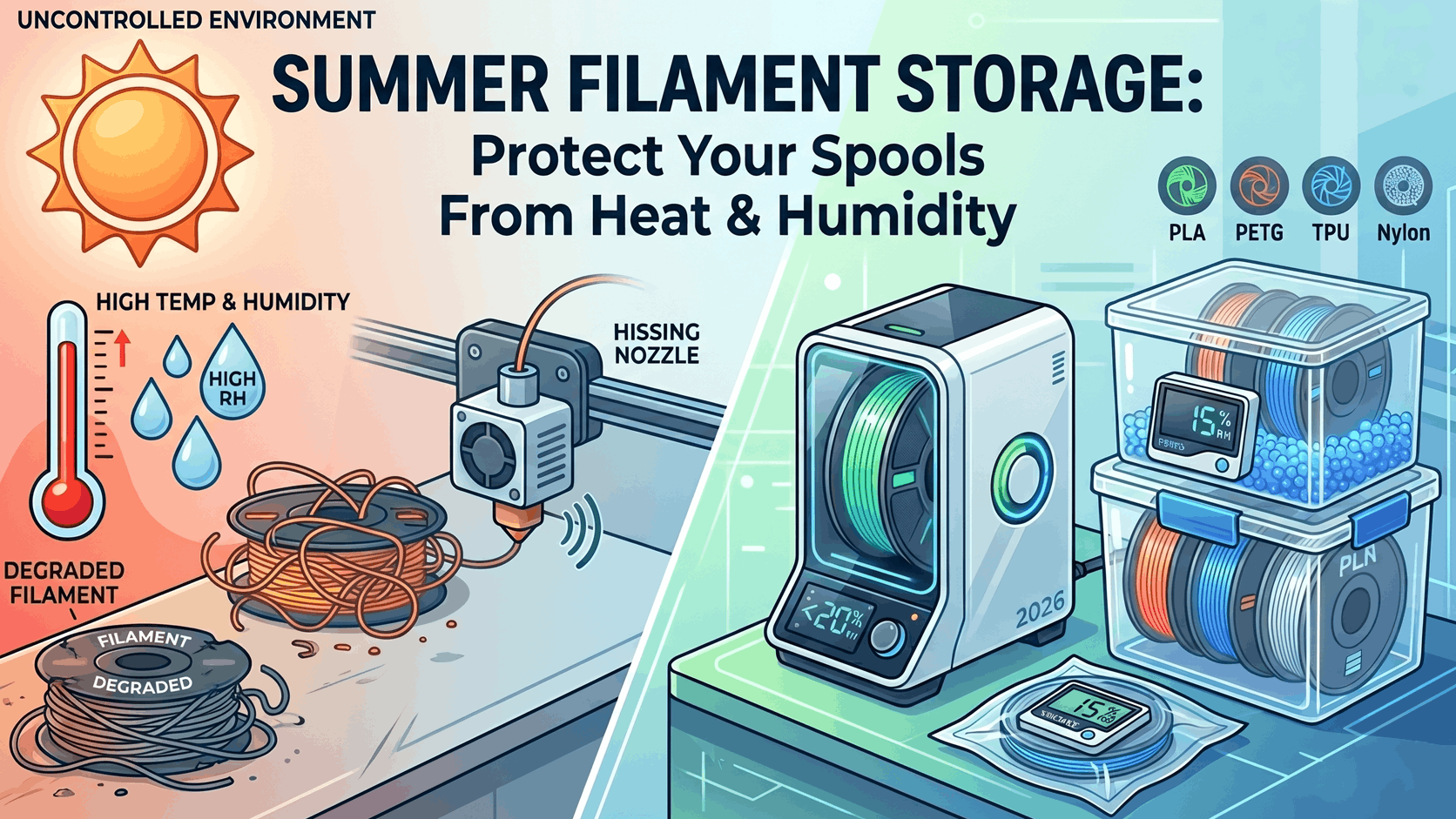
Summer Filament Storage: How to Protect Your Spools From Heat and Humidity in 2026
Summer is the hardest season for your filament shelf. Heat softens spools, humidity ruins prints, and most hobbyists do not realize how fast both happen until they get a hissing nozzle or a deformed roll. Here is a practical summer playbook covering where to store filament, how to dry it, and what to stop doing right now.