Which 3D Printer Can Actually Print the Filament You Want? (2026)
Four hardware gates decide what a printer can run: enclosure, nozzle temperature, a hardened nozzle, and dry storage. Here is which current machines clear each one.
Josh Holtzclaw
Most "best 3D printer" advice is written backwards. It picks the printer first and treats filament as an afterthought, when the material you intend to print is the thing that actually rules machines in or out. A $200 open-frame printer will never print ASA well, no matter how good its reviews are, and no amount of tuning fixes that.
Four hardware gates decide the question. Everything else (speed, bed size, multi-colour, auto-levelling) is comfort.
The four gates#
| Gate | What it does | Materials that need it |
|---|---|---|
| Enclosure | Holds ambient heat so layers do not contract at different rates and peel off the plate | ABS, ASA, polycarbonate (strongly), nylon (required) |
| Nozzle temperature | Some polymers simply do not flow below a threshold | Polycarbonate and nylon want 260-300 °C; a 260 °C ceiling rules both out |
| Hardened nozzle | Abrasive fill shreds brass in hours | Carbon-fibre and glass-filled blends (required) |
| Dry storage | Hygroscopic filament absorbs water and prints foamy, weak, and stringy | Nylon (required), PETG / TPU / PC (recommended) |
Those requirements come from our own material requirements data, the same set that drives the per-printer compatibility guides.
What this rules out, honestly#
The uncomfortable part first: an open-frame printer under about $250 is a PLA and PETG machine. That is not a criticism. PLA and PETG cover the overwhelming majority of what people actually print, and a well-tuned budget bed-slinger will out-print a badly-tuned expensive one every day of the week.
But be clear-eyed about the ceiling. Creality's Ender-3 V3 SE tops out at a 260 °C nozzle with no enclosure and a brass nozzle. That is three of the four gates closed. It prints PLA and PETG beautifully and it will not print nylon, polycarbonate, or anything carbon-filled. That last one is not a matter of quality but of destruction, because abrasive filament eats a brass nozzle.
If your honest answer to "what will I print?" is "PLA, and PETG when I need something tougher", buy the cheap machine and spend the difference on filament. Our beginner printer picks start there deliberately.
Which machines clear which gate#
Spec sheets, not prices. Prices move weekly and these gates do not. Current pricing lives on each brand page.
Enclosure + high nozzle temp (ABS, ASA, PC)#
This is the meaningful step up, and it is the one most buyers skip and then regret the first time an ASA print curls off the bed.
| Printer | Nozzle ceiling | Enclosed | Hardened |
|---|---|---|---|
| Elegoo Centauri Carbon 2 | 350 °C | Yes | Yes |
| Creality K2 Plus | 350 °C | Yes | Yes |
| Anycubic Kobra S1 Max Combo | 350 °C | Yes | Yes |
| Elegoo Centauri Carbon | 320 °C | Yes | Yes |
| Anycubic Kobra S1 Combo | 320 °C | Yes | No |
| Creality K1C | 300 °C | Yes | Yes |
| Creality K1 Max | 300 °C | Yes | No |
The pattern worth noticing: enclosure and a hardened nozzle usually arrive together at this tier, which means clearing the ABS/ASA gate normally clears the carbon-fibre gate at the same time.
Heated chamber (the nylon and PC gate)#
An enclosure traps heat passively. A heated chamber holds a set temperature, which is what high-warp engineering materials really want.
Across every printer we track, one machine has an actively heated chamber: the Anycubic Kobra S1 Max Combo. If serious nylon or polycarbonate work is the goal rather than an occasional experiment, that narrows the field to almost nothing at consumer prices, and it is the single clearest example of the material deciding the printer.
Hardened nozzle without the enclosure (carbon fibre on a budget)#
Carbon-fibre blends need a hardened nozzle; they only prefer an enclosure. So there is a cheaper path, and a few open-frame machines ship hardened from the factory:
- Anycubic Kobra X: 300 °C, open frame, hardened
- Anycubic Kobra 4: 300 °C, open frame, hardened
- Elegoo Centauri 2: 350 °C, open frame, hardened
A hardened nozzle is also the cheapest upgrade in 3D printing. If your printer clears the temperature gate and you only want to run CF-PETG occasionally, a nozzle swap costs less than a spool.
The decision, in one pass#
- Write down what you will actually print in the next year. Not the ambitious list. The honest one.
- PLA and PETG only? Any current machine works. Optimise for bed size and quality of life.
- ABS or ASA in the mix? You need an enclosure. Non-negotiable, and the reason is physics, not preference.
- Carbon fibre? Hardened nozzle, required. Check whether the machine ships with one or needs a $20 part.
- Nylon or polycarbonate seriously? Enclosure and a dryer, and a heated chamber if you can reach one.
- Then compare speed, volume and multi-colour between whatever survived.
Per-brand breakdowns of which materials each lineup handles are on the compatibility pages for Creality, Elegoo and Anycubic. For filament choice once the machine is settled, start at the tier list.
One note on timing#
Printer pricing in this segment swings hard around manufacturer sale events, and several are running right now. We pull current discount codes straight from each brand's own affiliate feed, with the expiry date on every one, at 3D printer deals. If you have already decided which gates you need, that is the page to check before you buy. The gap between list and sale price on a mid-range machine is routinely larger than the cost of the filament you will run through it in a year.
Specs above come from our printer database and reflect manufacturer-published figures. Prices change constantly, so always confirm on the product page before buying. We earn a commission on purchases made through links on this site, at no additional cost to you.
Related Articles
Is an Enclosed 3D Printer Worth It? (2026)
An enclosure buys you ABS, ASA and polycarbonate, and nothing else. Here is how to tell whether that is worth roughly double the price of an open-frame machine.
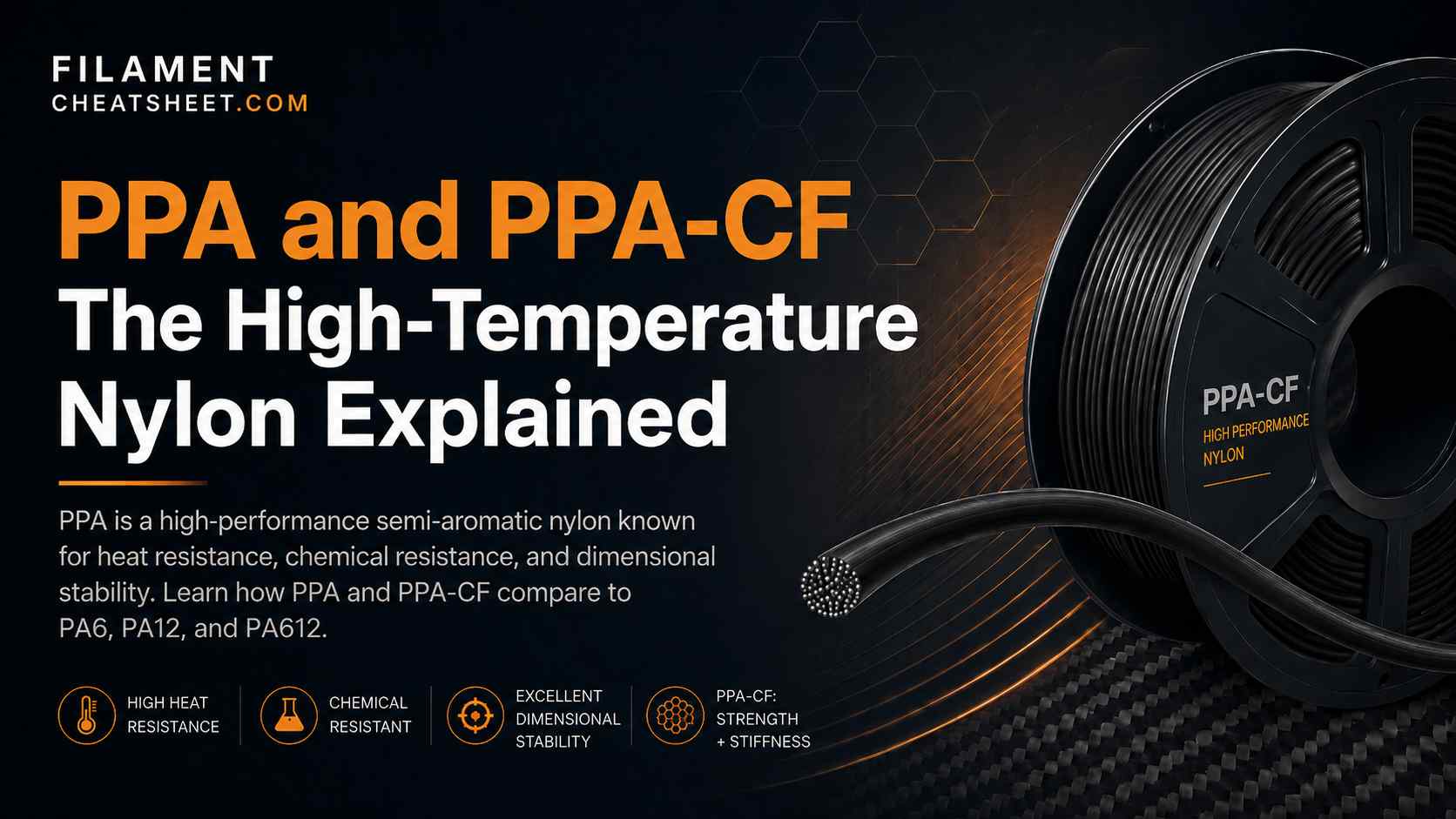
PPA and PPA-CF Filament: The High-Temperature Nylon Explained
PPA is a semi-aromatic nylon that outperforms PA6 on heat, chemicals and dimensional stability. A practical guide to PPA and PPA-CF, how they compare to PA6, PA12 and PA612, and what your printer needs.
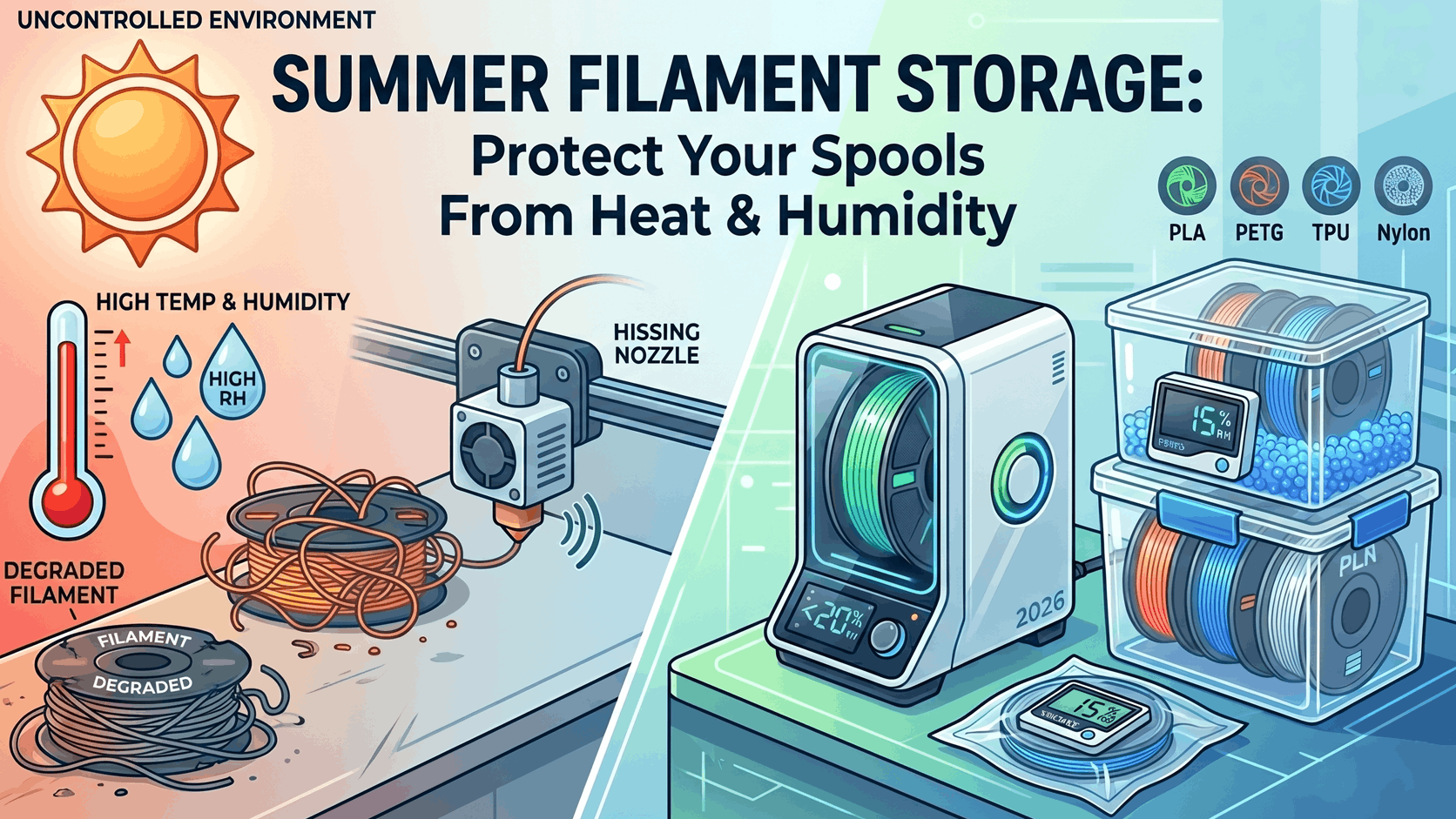
Summer Filament Storage: How to Protect Your Spools From Heat and Humidity in 2026
Summer is the hardest season for your filament shelf. Heat softens spools, humidity ruins prints, and most hobbyists do not realize how fast both happen until they get a hissing nozzle or a deformed roll. Here is a practical summer playbook covering where to store filament, how to dry it, and what to stop doing right now.